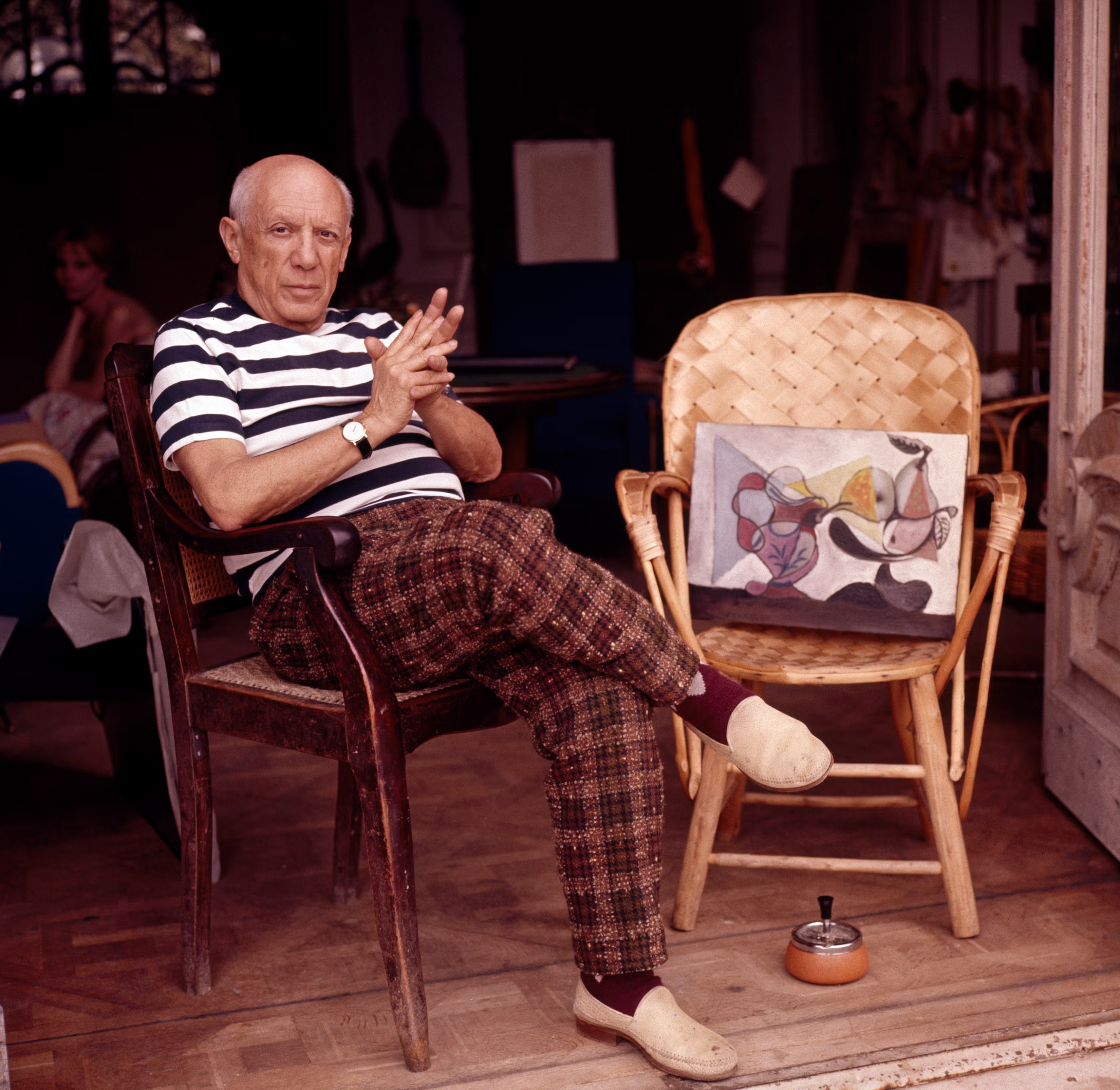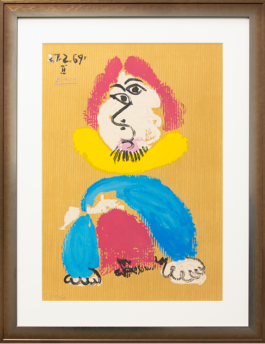
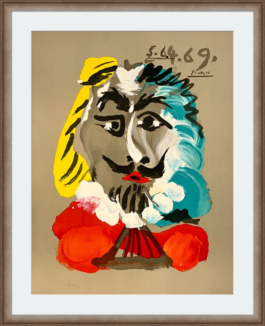
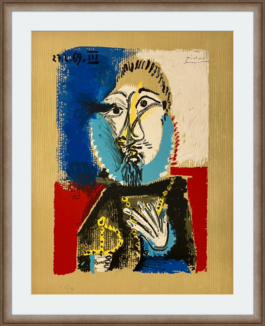
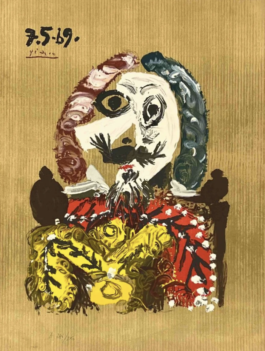
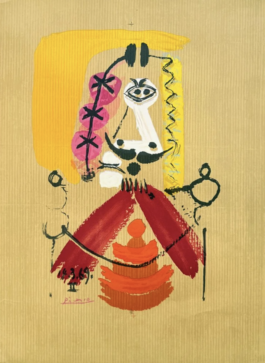
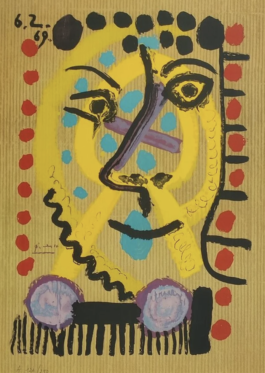
Pablo Picasso (1881–1973) worked across painting, sculpture, printmaking, and ceramics with a consistency of ambition that few artists in any century have matched. His development of Cubism alongside Georges Braque between 1907 and 1914 fundamentally altered the terms of pictorial representation, collapsing multiple viewpoints into a single plane and severing painting's obligation to the
visible world. That rupture informed everything that followed: the neoclassical works, the surrealist period, the late paintings, each phase conducted with the same forensic attention to what a mark on a surface can and cannot do.
His work entered major institutional collections early and has never left them. The Musée Picasso in Paris holds the largest single collection, with significant permanent holdings at the Museum of Modern Art in New York, the Art Institute of Chicago, and the Reina Sofía in Madrid, where Guernica has been housed since 1992. During his lifetime, retrospectives were mounted at MoMA as early as 1939, and his presence in the canon was established well before his death, an unusual position for any artist to occupy while still working.
Picasso received the Lenin Peace Prize in 1950 and again in 1961, though the biographical details of his life have grown increasingly complicated for contemporary audiences. What the work continues to offer is something more durable than reputation: a sustained inquiry into the nature of form that remains, across more than seventy years of production, genuinely unresolved.