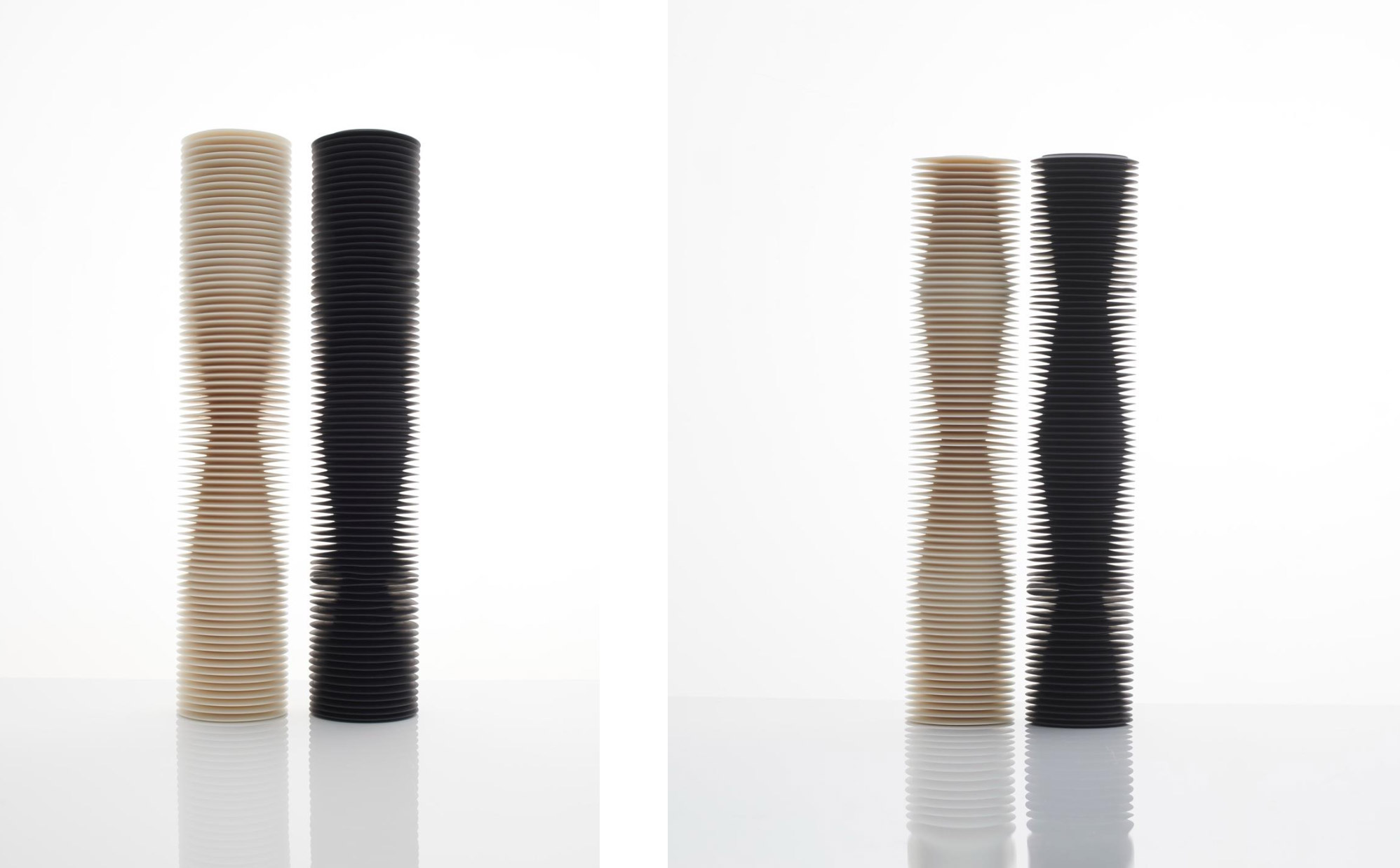
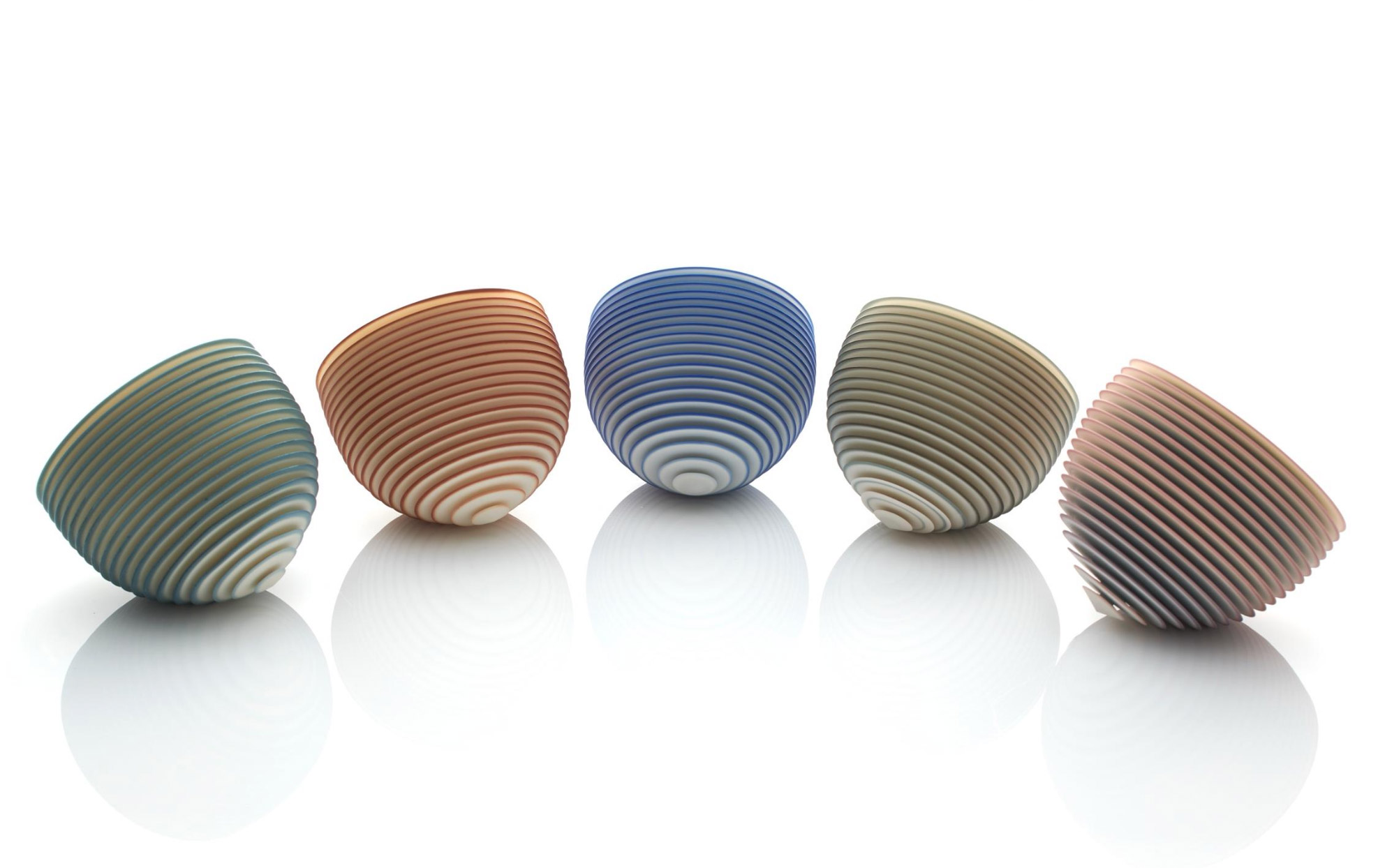
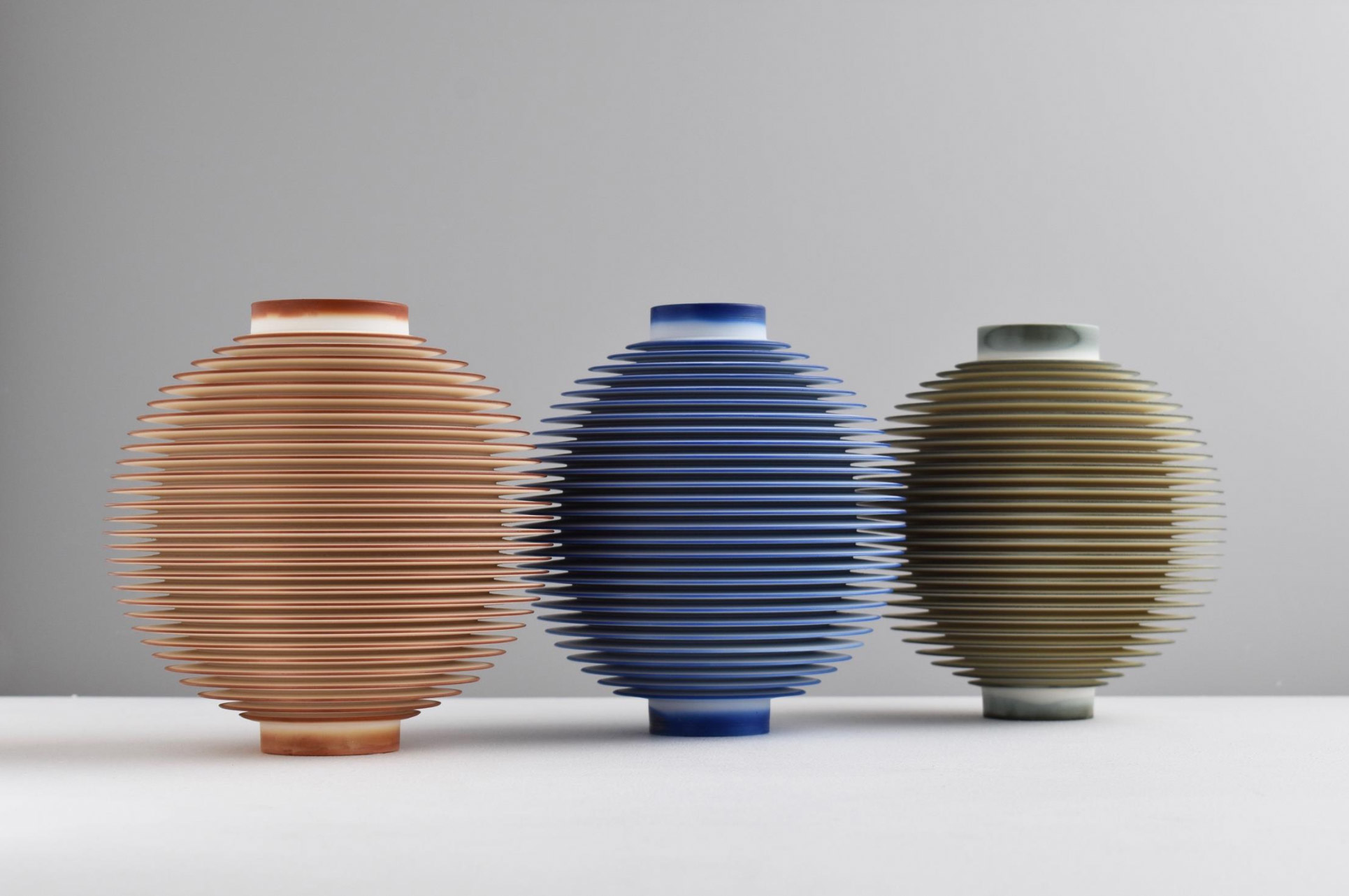
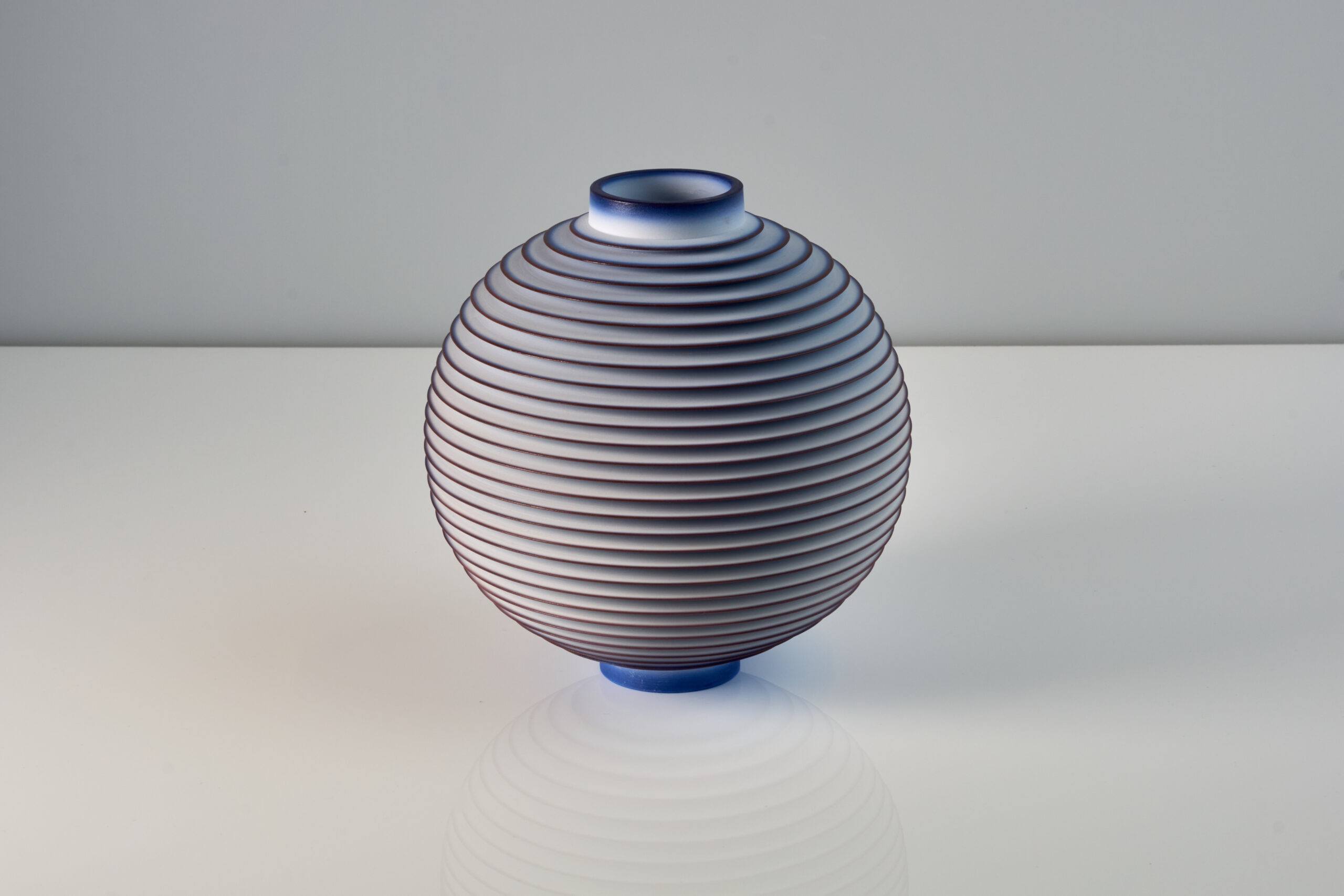
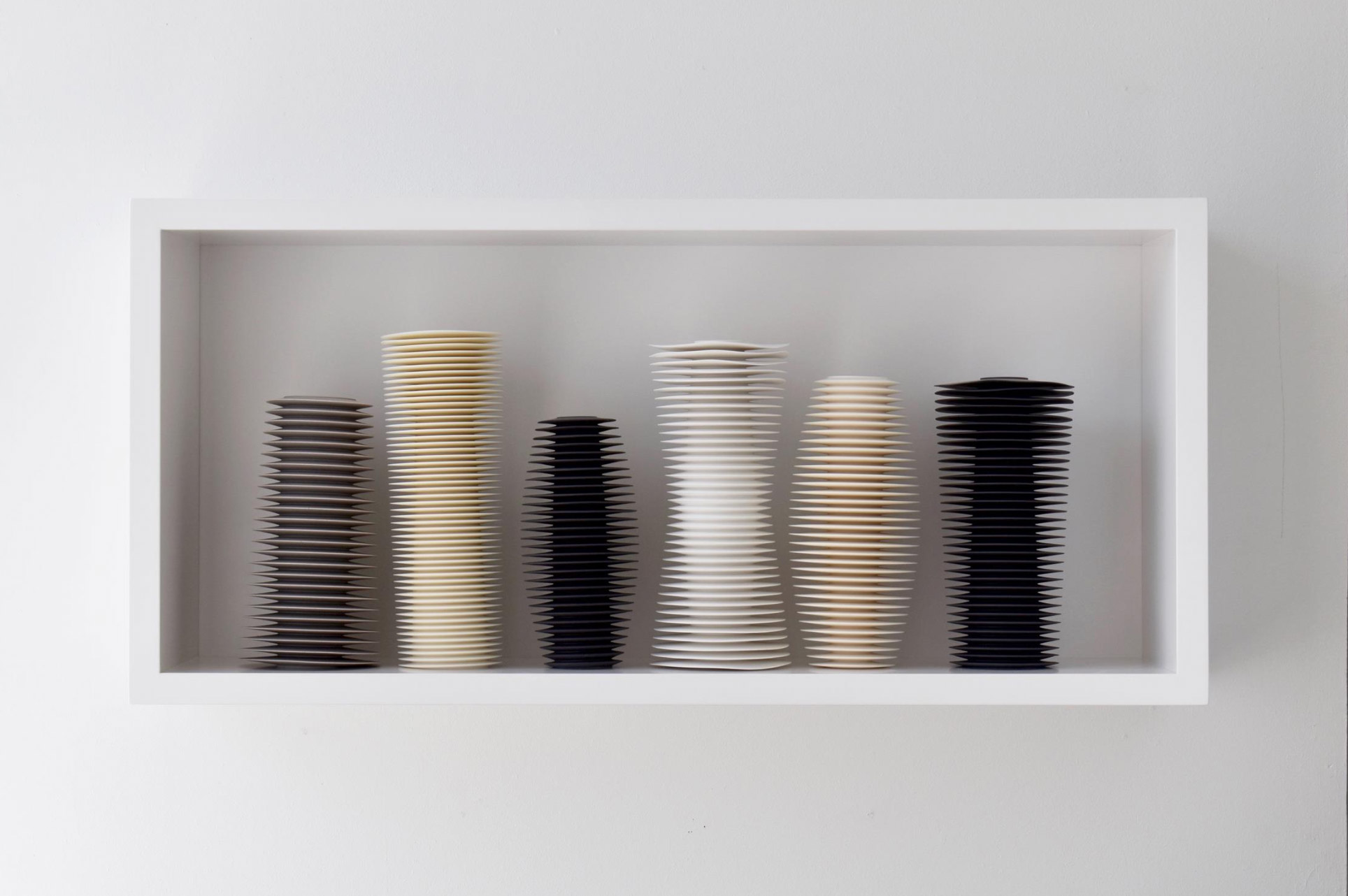
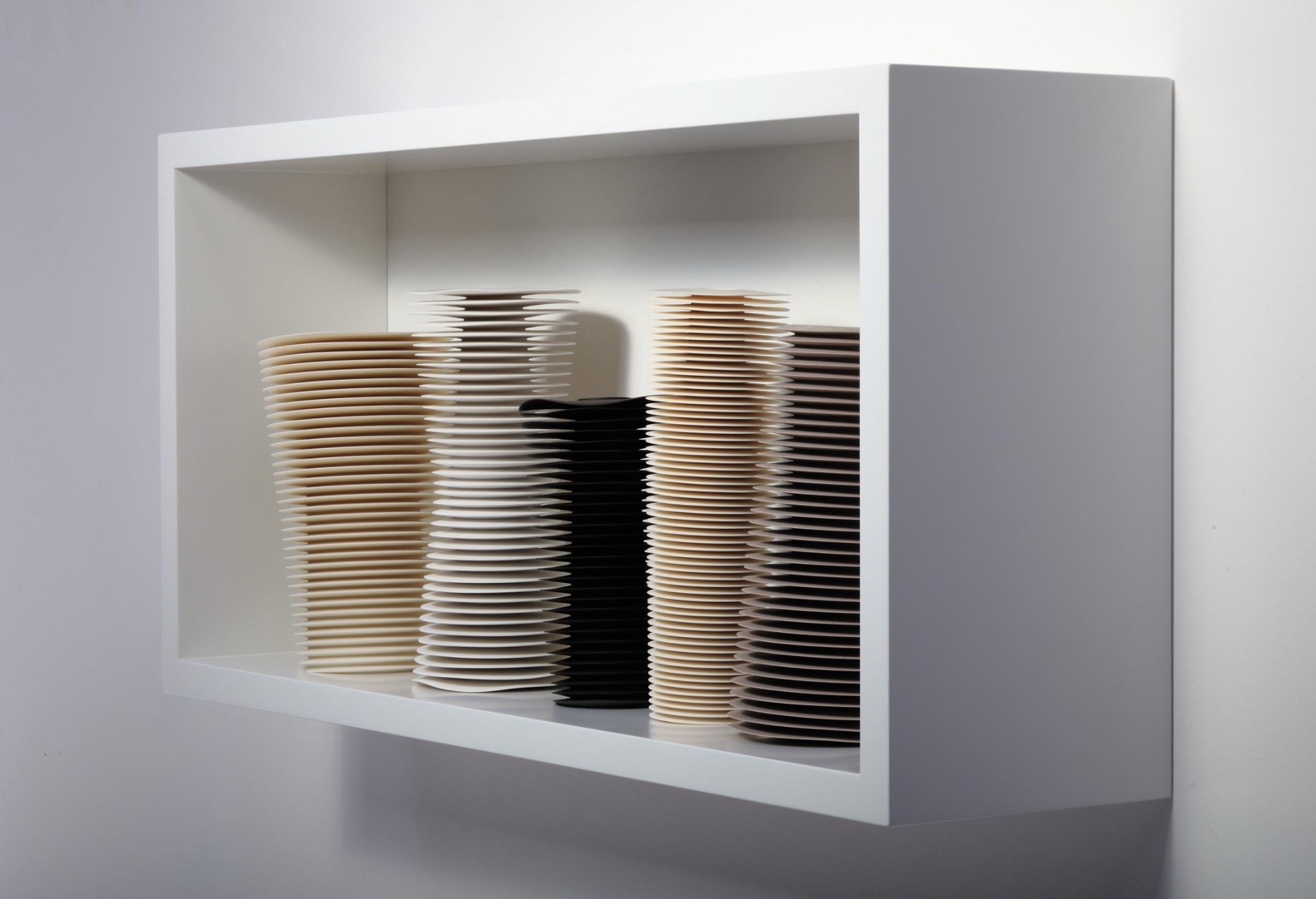
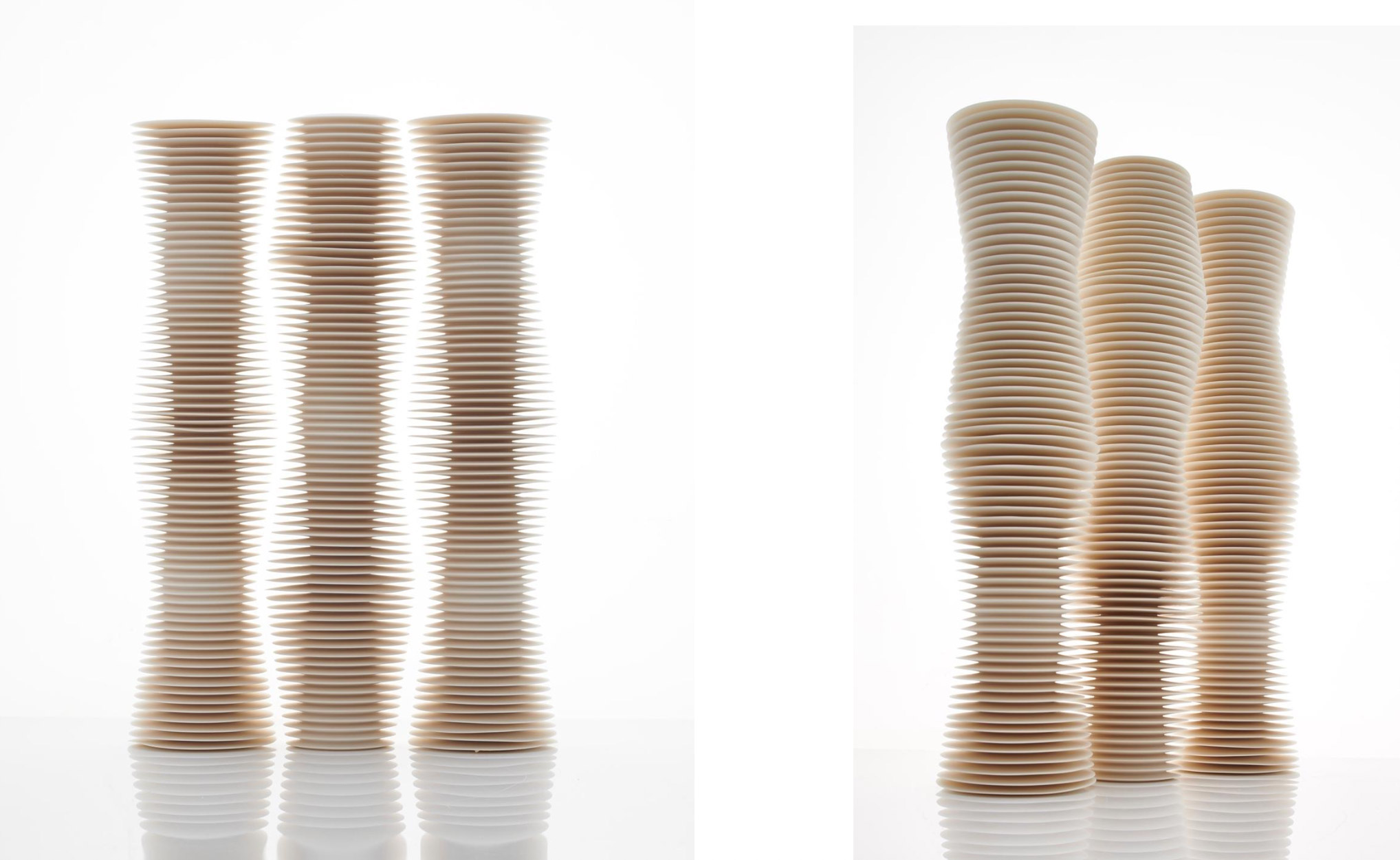
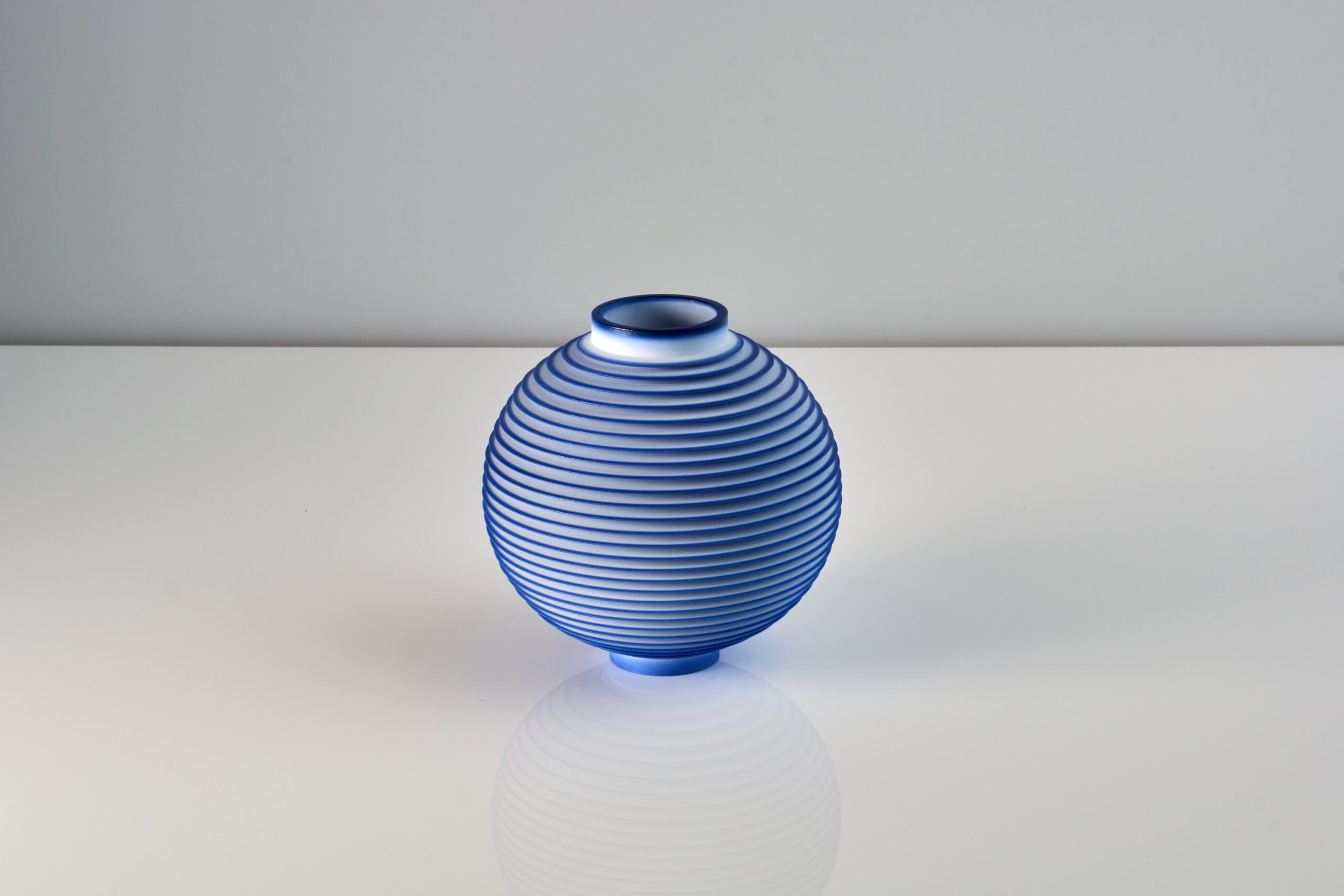
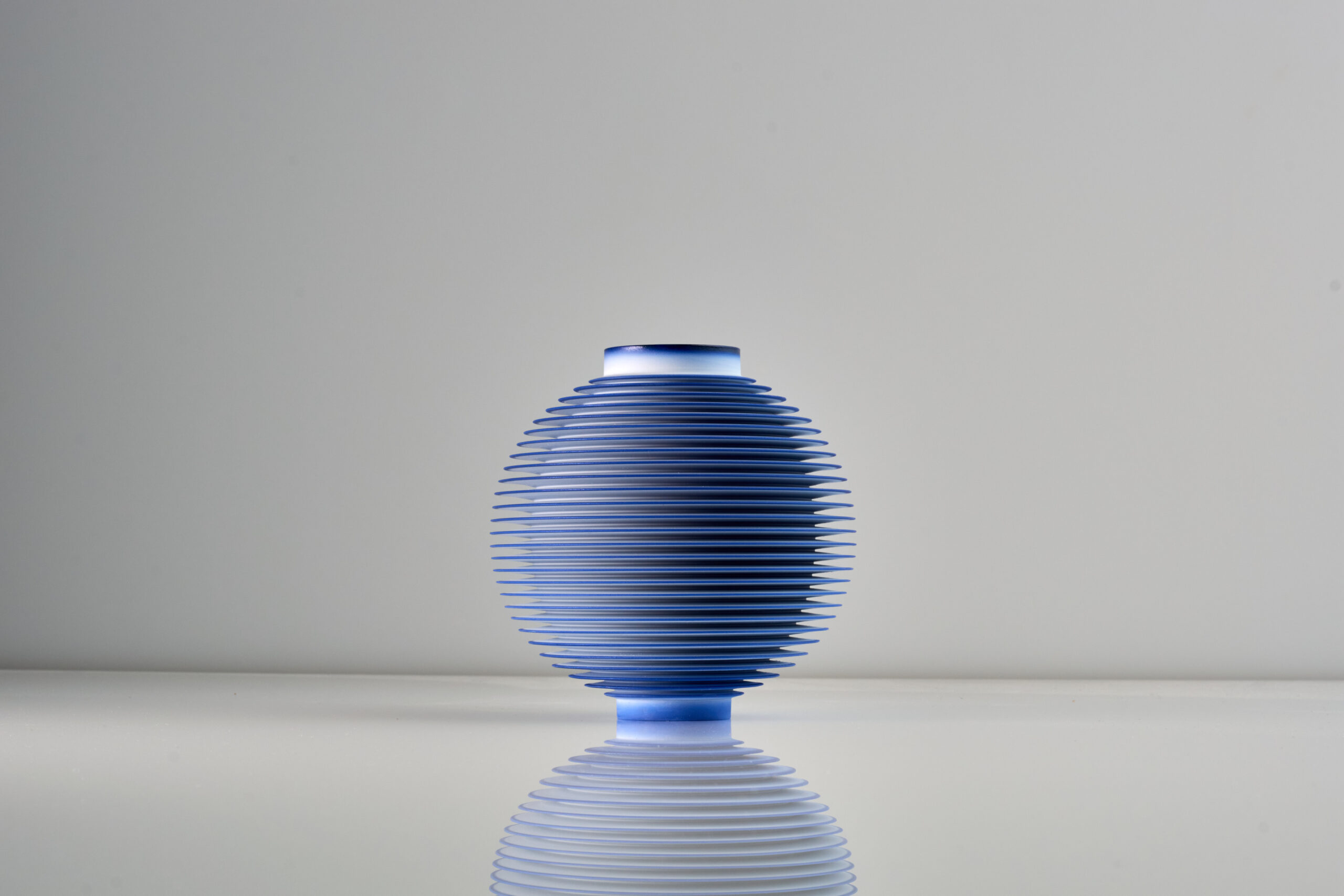
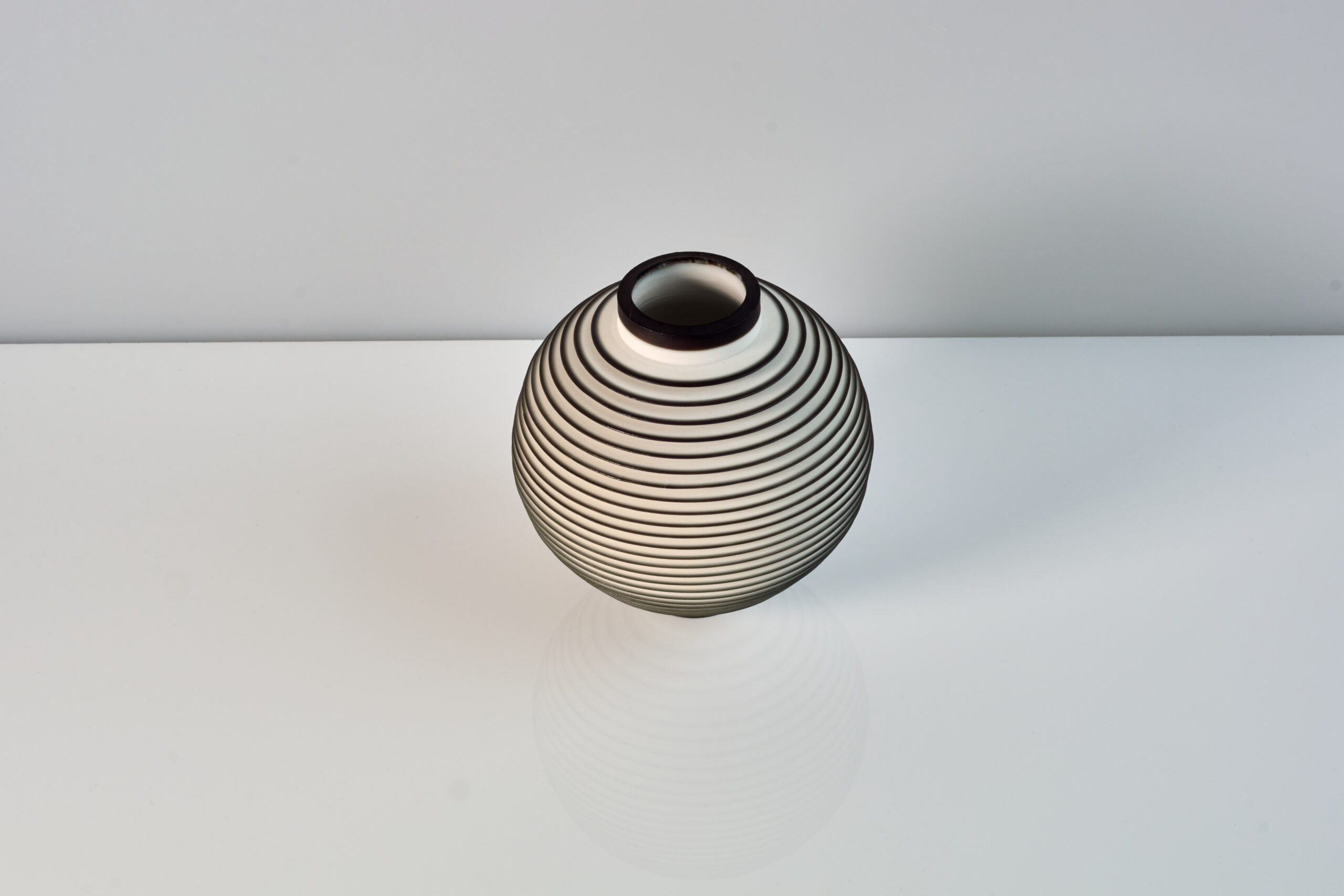
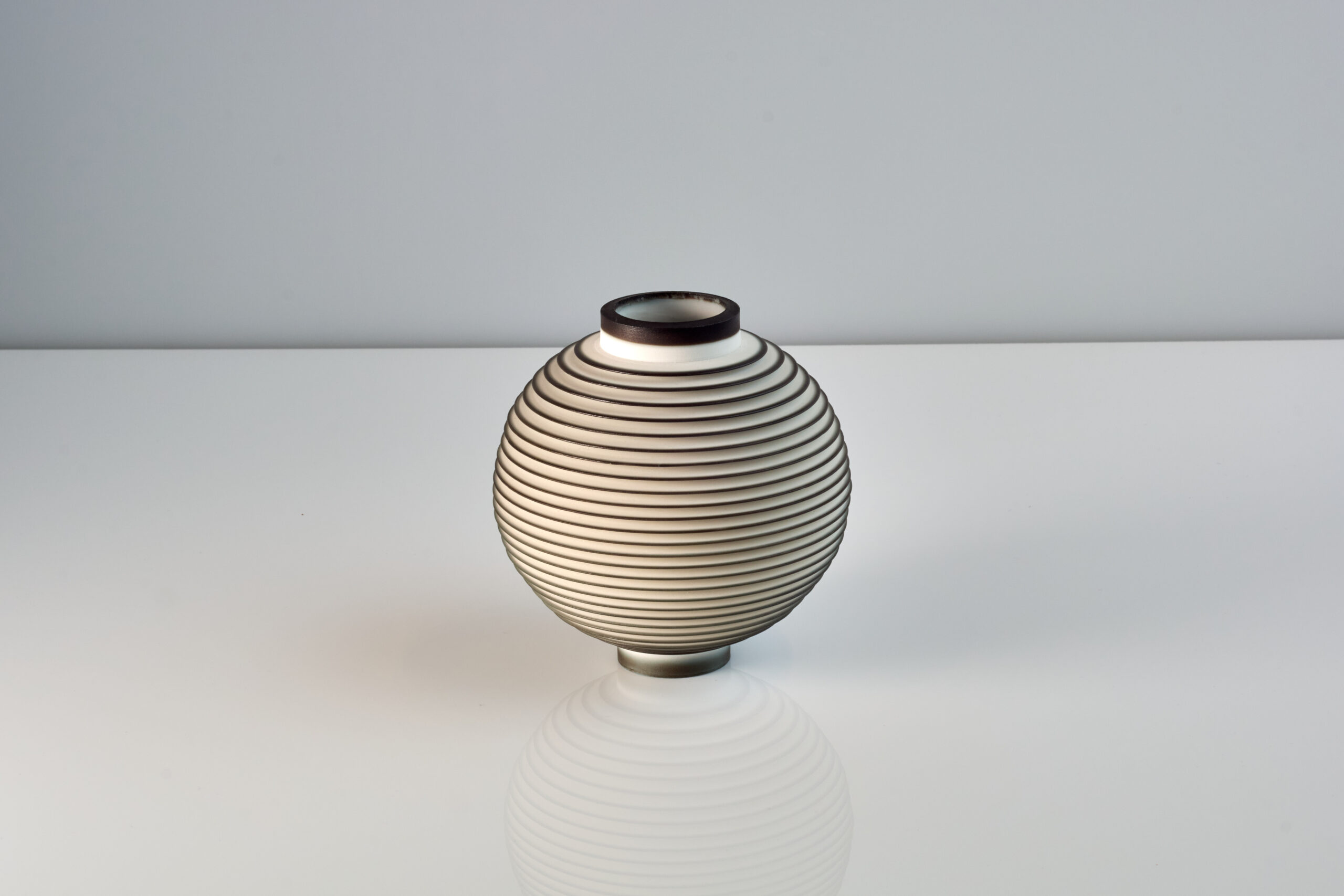
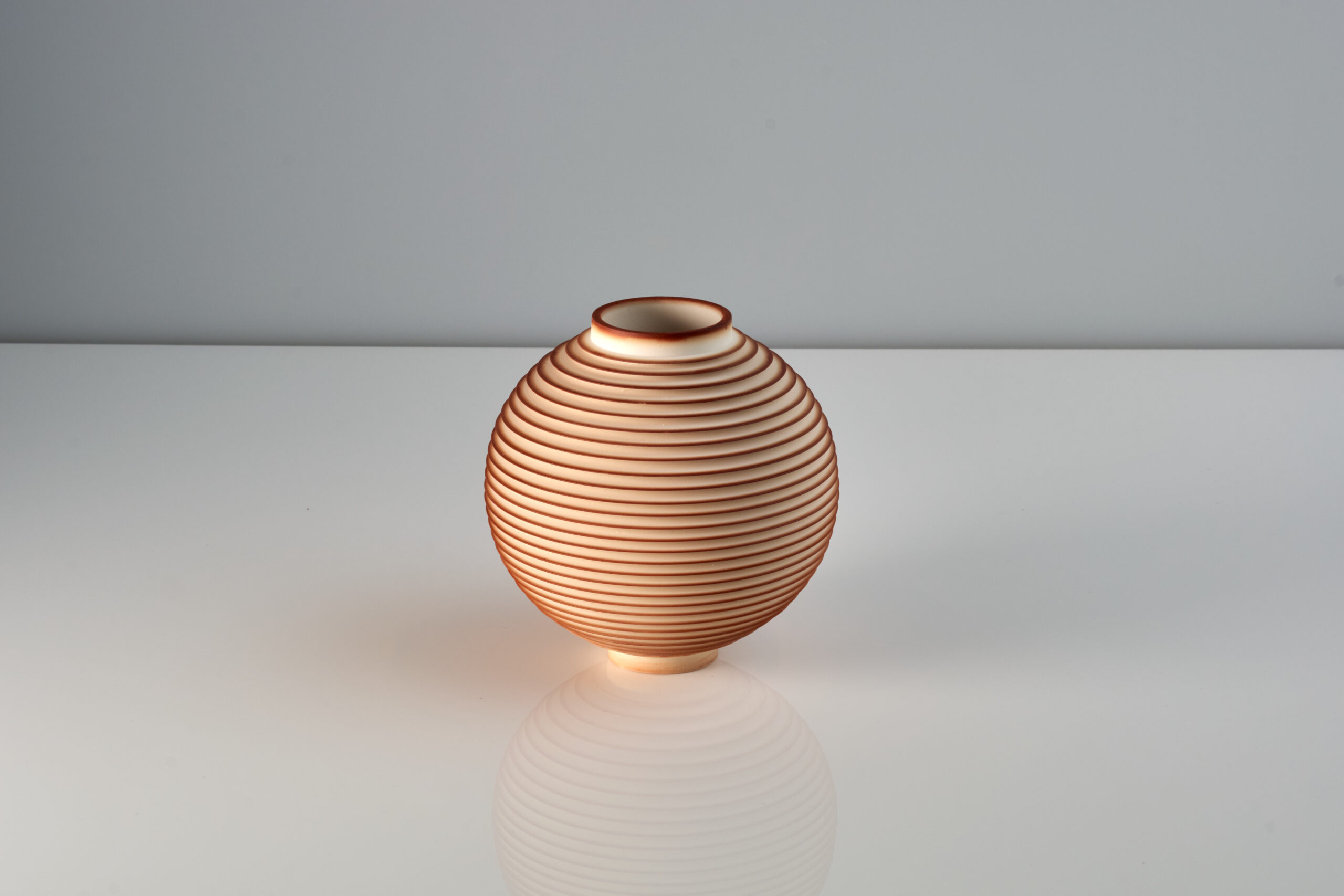
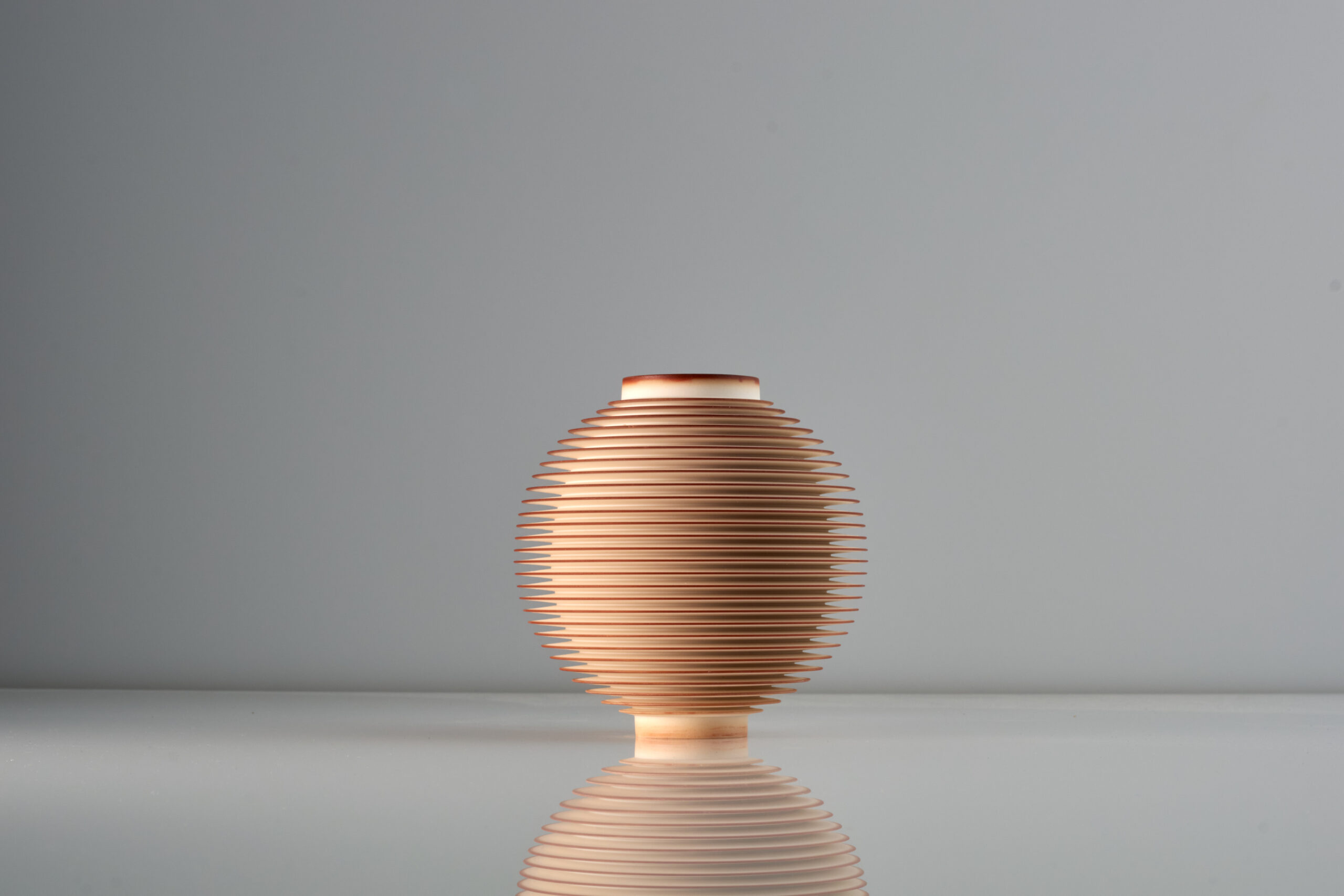
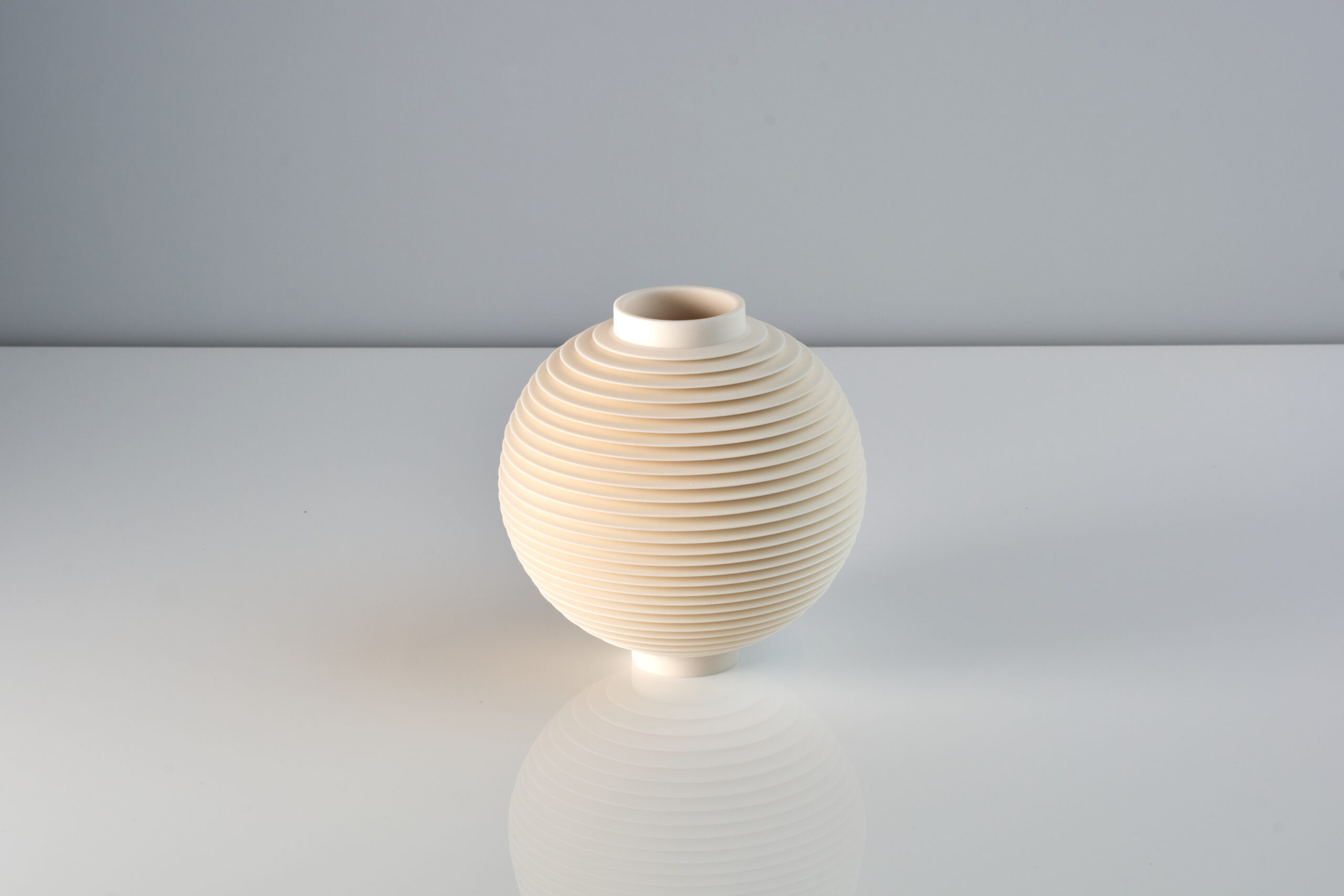
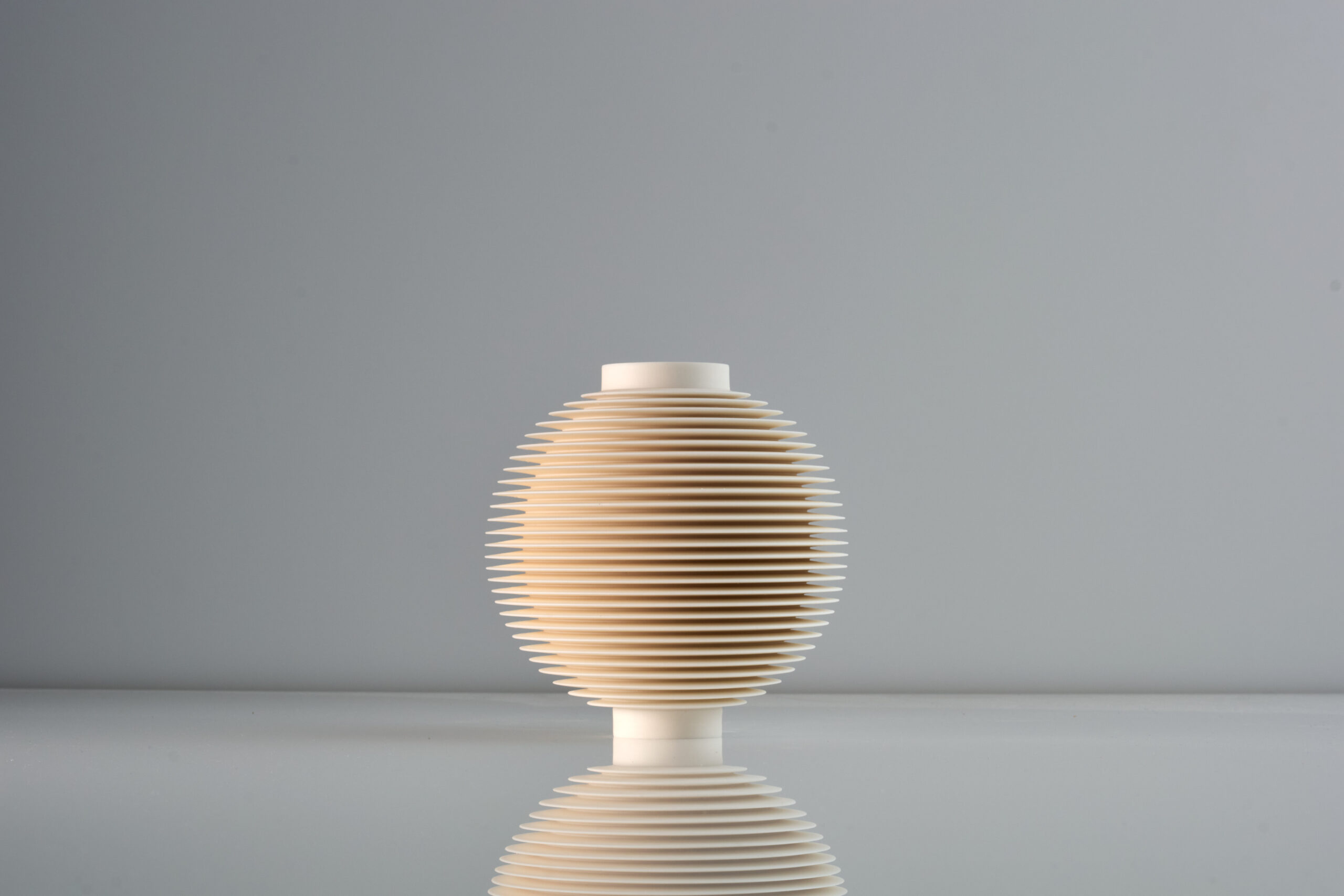
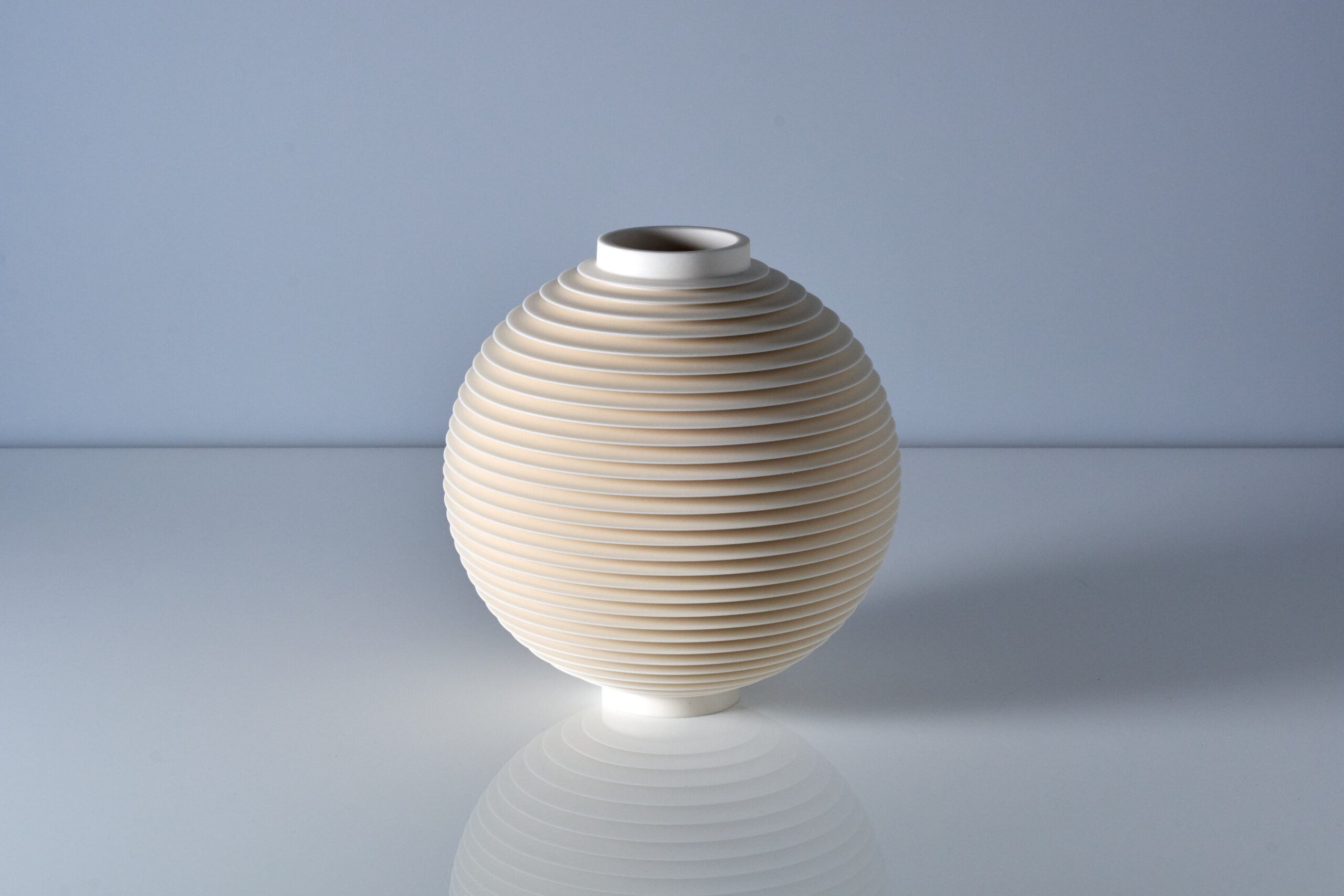
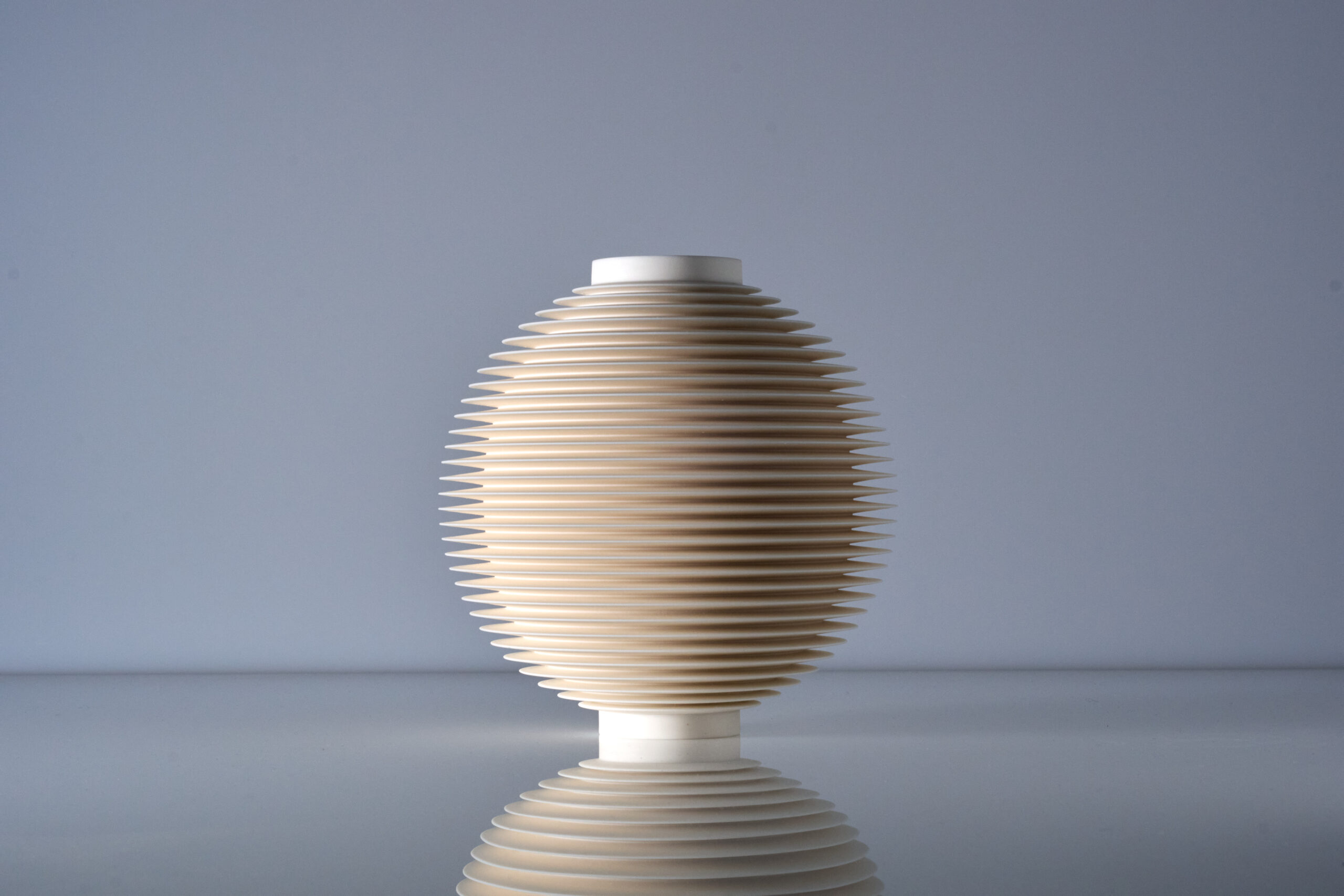
A Nicholas Lees vessel looks machine-made until you learn what it took to get there. The forms appear too perfect, the curves too exact, to have come from a wheel and a human hand, and that tension between precision and process is the entire enquiry.
Lees describes himself as fascinated by the transient and ephemeral nature of physical presence, how light, space, and time condition what we believe we see.
His vessels are studies in uncertainty disguised as studies in order.
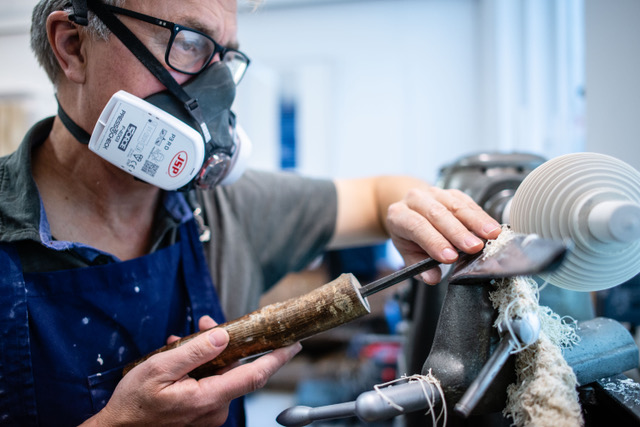
Working in Parian porcelain, a fine clay developed in Stoke-on-Trent in the nineteenth century, each piece begins as a thick-walled form thrown on the wheel, then is turned on a lathe by hand while leather hard, a process that can take six hours of total concentration with no room for error.
His Flux Work series introduces controlled risk: two forms fired together, one engineered to melt and wrap around the other, letting chance shape what precision cannot.
Lees studied English and History at the University of Kent before training in ceramics at Bristol Polytechnic, Cardiff, and the Royal College of Art, where he later received the Desmond Preston Award. His work is held by the Victoria and Albert Museum, the Fitzwilliam Museum, and the Museo Internazionale delle Ceramiche in Faenza, and has earned the Cersaie Prize and a Blanc de Chine Honour Award. He has shown at Collect, the London Art Fair, and PAD London, represented by Cavaliero Finn.