Artspeak, Simplified.
Art is first and last a human experience. Yet, navigating the art world can feel like deciphering a foreign language. A lot of critics and galleries use ‘artspeak’ - terms that feel distant and never quite explain what they're describing. My annoyance with this practice led me to make this video - Know What You Hate.
But what if we could simplify the vocabulary of art, without dumbing down the field I love so dearly?
Answering this question inspired me to uncover the Three N's: Nuance, Novelty, and Narrative. I believe that, using just these three terms, we can have an intelligent conversation about every piece of art ever made that is not only interesting, but also identifies the sort of art that stands the test of time.
Novelty: The Spark of Originality
Novelty is all about originality. How fresh is the work? How much does it stand out from the crowd? Even the greats started by mimicking others, but eventually found their voice and created something new. That’s the journey every artist hopes to uncover.
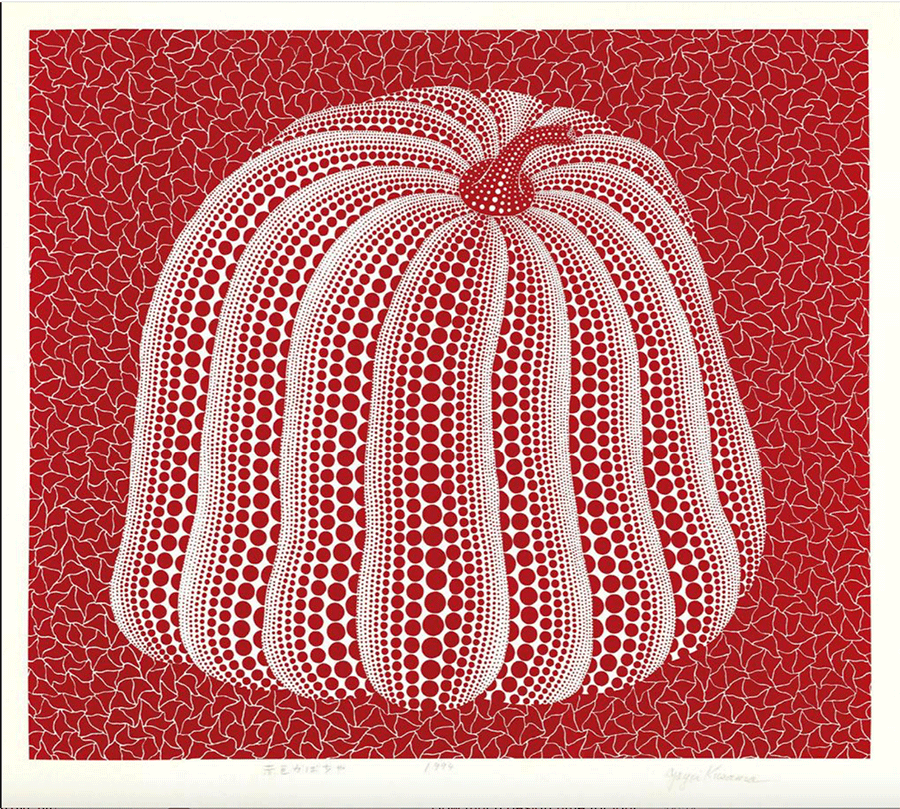
A piece with a lot of novelty grabs your attention and holds it. It’s the kind of artwork that you notice every time you walk past it, rather than letting it fade into the background like yesterday’s wallpaper. Think about Yayoi Kusama, the avant-garde artist whose signature polka dots and immersive installations have made her work instantly recognisable. Kusama's originality lies not only in her visual style but in the way she transforms spaces into otherworldly experiences. Her art isn't just something you observe; it's something you step into, becoming part of the narrative. This kind of novelty doesn’t just catch your eye—it demands your participation.
This originality also gives an artist’s work a fighting chance to increase in value, both emotionally and financially. However, novelty alone isn't everything. A piece of art can be highly original but still lack the depth needed to make it truly resonant.
Nuance: The Craft Behind the Creation
The second N is Nuance — the years of subtle, microscopic improvements in skill that creates expertise. To me, it's the heart of the age-old question: could my kid make that? Not everyone agrees on the importance of nuance, so it’s a hot topic for debate. Personally, I’m a fan. It’s what often separates a good piece of art from one that leaves me staring in awe. It creates the layers that reveal themselves the longer you look.
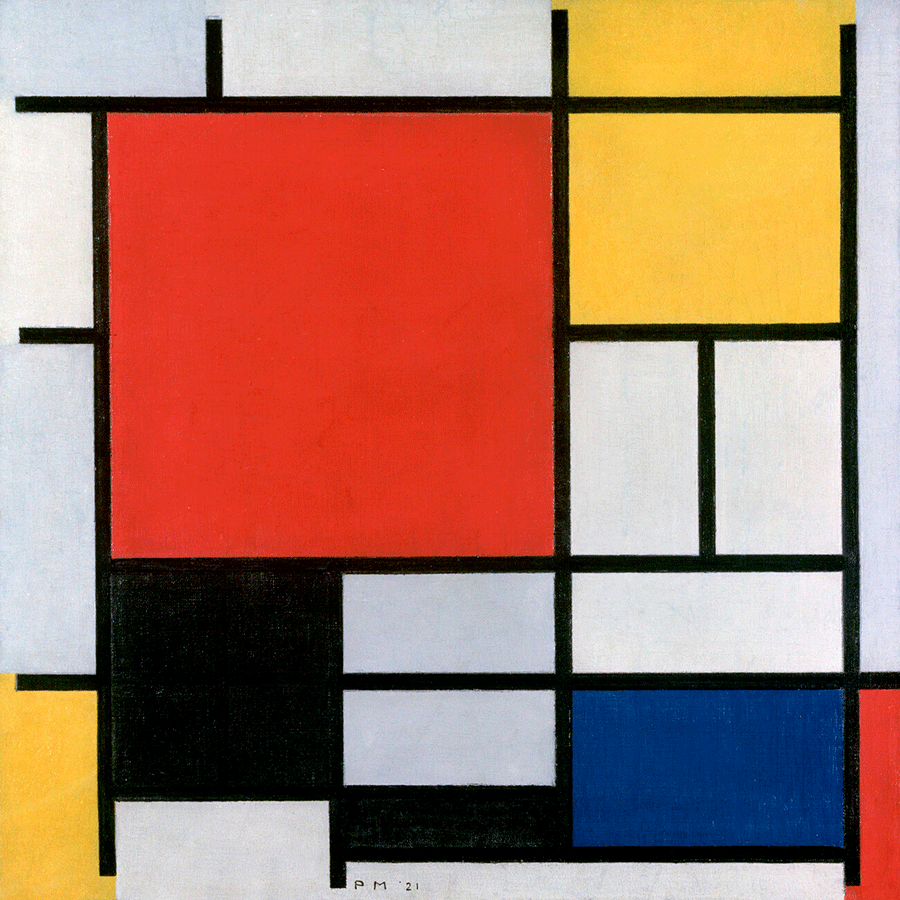
Having said that, I don’t believe every piece requires painstaking effort to qualify as having nuance. If the work reflects years of practice, or a mastery of insight, it can still have nuance. I made this short video about the nuance of Piet Mondrian. At first glance, his geometric shapes and primary colours might seem incredibly simple, but there’s a lot more going on. His journey to abstraction was influenced by Einstein and atomic theory (!!), making his work far more nuanced than it initially appears.
Narrative: The Story Art Tells
‘Scoring’ The Three N's To Choose Art In Your Home
I use the framework of Nuance, Novelty, and Narrative as a personal guide to talking about art. Just for a bit of fun, when speaking with others I give each a score from 1-10. Of course, giving art a score gets a lot of haters. But I think, lighten up. It's a conversational device. We score a movie or a meal out of 10 all the time and seem to avoid the pitchforks.
Personally, the three scores have to total up to '20' to be something I'd buy (but you don't have to agree!). I can love a piece of art that gets a 5 on Novelty, a 5 on Nuance, and a 10 on Narrative. So I don’t think every piece of art has to kill it in every category, but I do believe Narrative is the most important, and I could never personally own anything below an 8…).
If you have a little nerd in you, you may enjoy learning about Aristotle's theory of rhetoric, which is what initially inspired The 3 N's.
In Summary…
Use your scores to curate a collection that not only beautifies your space but also reflects your personal journey and values.
If you'd like to explore the journey from art lover to art collector, you may enjoy reading this piece: When is Art an Asset? And if you'd like some help finding art you'll love forever, you may enjoy taking my Taste Test - which allows me to come up with specific ideas for your taste and budget.
Have a great weekend,
Richard
Founder